
Why we read every night (from a speechie who's also a very tired mum)
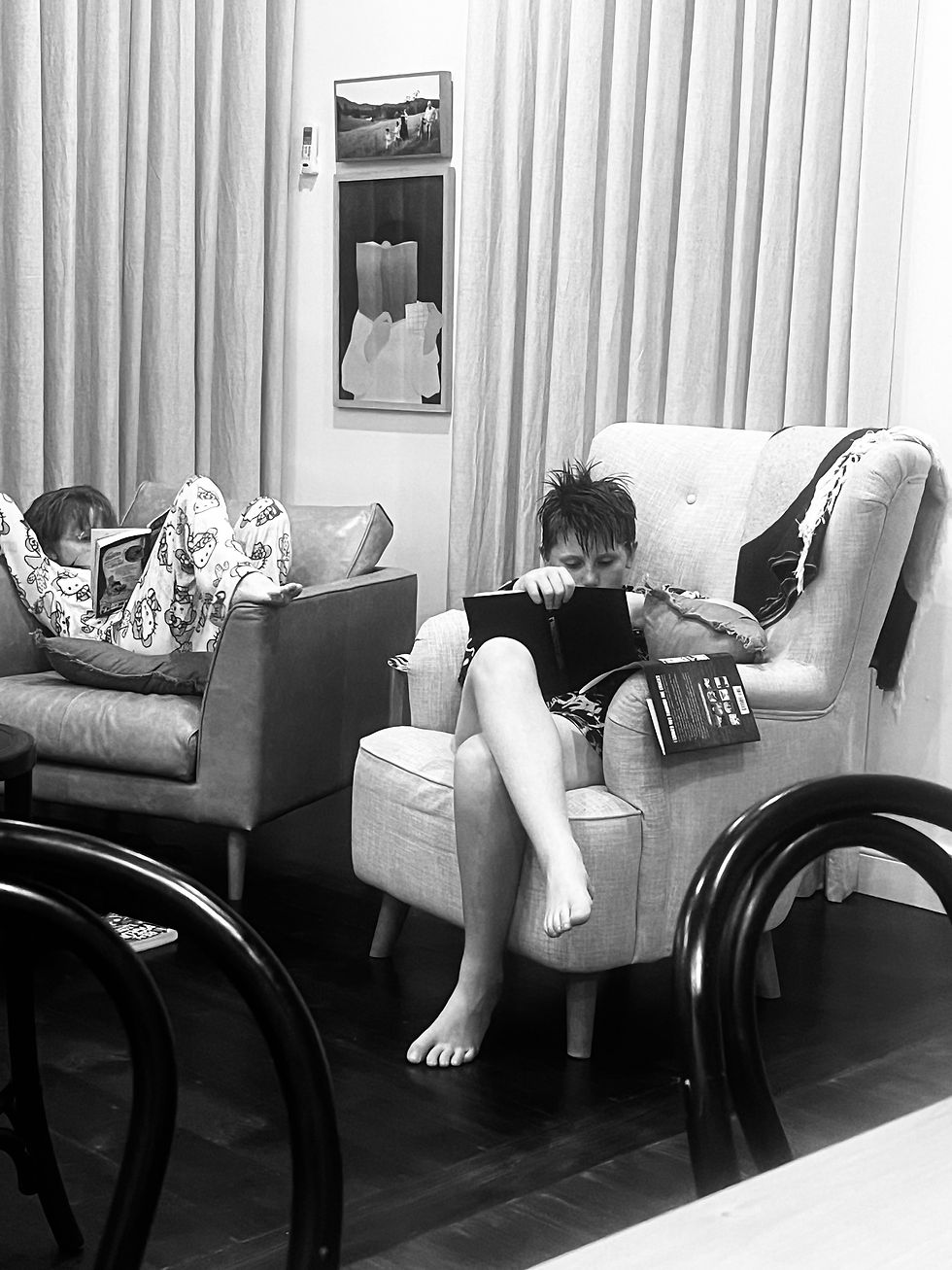
It's Book Week next week, and this year's theme is a lovely one: Symphony of Stories. As a speech pathologist I could give you the clinical case for reading in my sleep. But I'm also a mum of four (Patrick, Olivia, Henry and Edward, aged six through twelve) so I know the reality too. Reading every night sounds gorgeous on a poster. On a real Tuesday, after work, dinner, homework and the bath battle, it can feel like one more thing. I want to talk about both: why it matters so much, and how to actually make it happen without it becoming a war.
Why it's worth the effort
Here's the part that keeps me committed even on the flat nights. Reading aloud, and reading together, is one of the most powerful language-building things you can do with a child, and it's free. When we read with our kids, they hear vocabulary they'd almost never meet in everyday chat. Picture books and novels are full of words like shimmering, reluctant, ancient, marvellous, words we simply don't use asking someone to put their shoes on. Research suggests children who are read to daily hear more than a million extra words before they even start school. Those words become the raw material for talking, writing, understanding their teacher, and one day sitting an exam.
But it's not only vocabulary. Stories teach children how narratives work, that events have a beginning, a problem, a turning point and an ending. That sense of story structure sits underneath their own ability to tell you about their day, to write a school recount, to follow a lesson. And reading together builds something you can't measure on any assessment: a warm, close, screen-free few minutes where your child has your full attention. That connection is half the magic.
The honest bit
I'm not going to pretend it's serene in my house. Some nights someone's in tears, someone else has hidden their reader, and I've read the same board book so many times I could recite it underwater. We don't manage every child, every night, perfectly and that's completely fine in my book. Reading routines don't have to be flawless to work. They have to be frequent. A short, happy five minutes beats a long, tense twenty every time.
A few things that genuinely help in our house:
Make it the same time every night, tucked into a routine that already exists — after teeth, before lights out. When reading rides on the back of a habit that's already automatic, you don't have to find willpower for it. It just happens.
Let them choose. A book they love beats a "better" book they're enduring. Comics, joke books, footy annuals, the same favourite for the hundredth time. It all counts! The goal is a child who wants to read, not one who's been marched through the right titles.
Keep reading to them long after they can read alone. Reading a chapter above their own level exposes them to richer language and keeps it a shared pleasure rather than homework. My twelve-year-old still loves being read to, and I'm in no rush to stop.
Don't turn every book into a quiz. You don't need to test comprehension after each page. Chat about it like two people who enjoyed the same story "I can't believe she did that, can you?" and you'll build far more than any worksheet.
For your six-year-old
At six, many children are just cracking the code — sounding words out, gaining confidence, still needing lots of shared reading. Take turns: they read a line, you read a line, so it never feels like a mountain. Run your finger under the words. Do the silly voices. And keep the picture books coming, because they're doing serious language work behind all that fun.
Books this age tends to adore: anything by Aaron Blabey (Pig the Pug, Thelma the Unicorn, and The Bad Guys for the ones ready for early chapters), Jackie French and Bruce Whatley's Diary of a Wombat, Lynley Dodd's Hairy Maclary books, Julia Donaldson's The Gruffalo and Zog, Nick Bland's The Very Cranky Bear, Mo Willems' Elephant and Piggie series for brand-new readers, and Andy Griffiths and Terry Denton's early titles once they're ready to giggle their way into longer books.
For your nine-to-twelve-year-old
This is the age where reading can really take off (or quietly fall away as screens and sport crowd in). Protecting it matters. Let them read whatever grips them, even if it's the same series on repeat. A child who's read every Treehouse book twice is still a reader. Keep books visible around the house, let them stay up an extra ten minutes if it's for reading (works a treat in my place), and talk about what they're reading like it's genuinely interesting to you, because to them it is.
Books this age tends to love: Andy Griffiths and Terry Denton's Treehouse series, Jessica Townsend's Nevermoor books (a wonderful Australian series), Rick Riordan's Percy Jackson, R.J. Palacio's Wonder, Dav Pilkey's Dog Man, Jeff Kinney's Diary of a Wimpy Kid, Peter Brown's The Wild Robot, Emily Rodda's Deltora Quest for the fantasy lovers, and Harry Potter for the ones ready for a big, absorbing world.
This Book Week
You don't need a costume or a fancy plan. You need a book, a few quiet minutes, and the willingness to do it again tomorrow even when tonight was a shambles. That's the whole secret not perfect, just often. A symphony, after all, is built one small note at a time.
Happy Book Week from our noisy, book-strewn, very ordinary house to yours.



Comments